. ݁₊ ⊹ . ݁ ⟡ ݁ . ⊹ ₊ ݁.
What made me write this post:
As a kid, I really loved reading, especially in my English classes. I remember how engaged we’d get with the books: dissecting characters, analyzing storylines, imagining the locations. I loved it all. Somewhere along the way, as I got older, that passion began to fade. I stopped reading regularly, mostly because I didn’t have to anymore. Without the structure of school, I didn’t feel compelled to just pick up a book and read.
Over time, I started noticing changing in myself, especially in my speech. My vocabulary felt limited, and I found myself struggling to recall words or express myself the way I used to. It frustrated me. That is when I decided to try reading again. Something was blocking me. I could not fully immerse myself in the books like I once did. Especially in this age of constant stimulation and scrolling, it was hard to just sit with a story. Everything shifted when I stumbled across a video on book annotation. It opened up a new world!! One that made reading interactive again. I already had highlighters and a pencil, so I grabbed some annotation tabs and a dictionary… and started.
That dictionary by the way is one of my favorite tools and one I rarely see mentioned in annotation content. It’s made such a huge difference. I’ll explain why later in the post, but I wanted to share a quick backstory on how I reconnected with reading. How annotation helped me read books in a more immersive way.
Why I annotate:
- Helps with memory retention:
One thing people don’t talk about enough when it comes to burnout or stress is memory loss. Over time, things that were once easy to remember became a huge strain. For me, this showed up with words. I started mixing up phrases or forgetting the exact word I wanted to use, and it became frustrating. That all began to heal when I started annotating. I noticed my memory, especially with vocabulary, began improving. I even started having little vocabulary sessions with myself, looking up words I didn’t know, unlinking them, using a dictionary. Over time, I started remembering the little things again. Word and clarity came back to me.
2. Deepens connection with characters and world
Now I love putting myself into storylines, imaging what I’d do in a characters place. If I could live as Elizabeth Darcy for a day? 10/10 would. That’s what annotating gives me, a deeper sense of emotional immersion. I feel like I’m living through the characters. Their experiences become my own. I laugh with them, ache with them, and feel for them. Its refreshing.
3. It feels like journaling, but with a book.
If you enjoy journaling like I do, annotation is going to feel similar. Its like writing your thoughts, reactions, and emotions into the book itself. Instead of using a separate notebook you’re chatting directly with the author, the characters, and the themes.
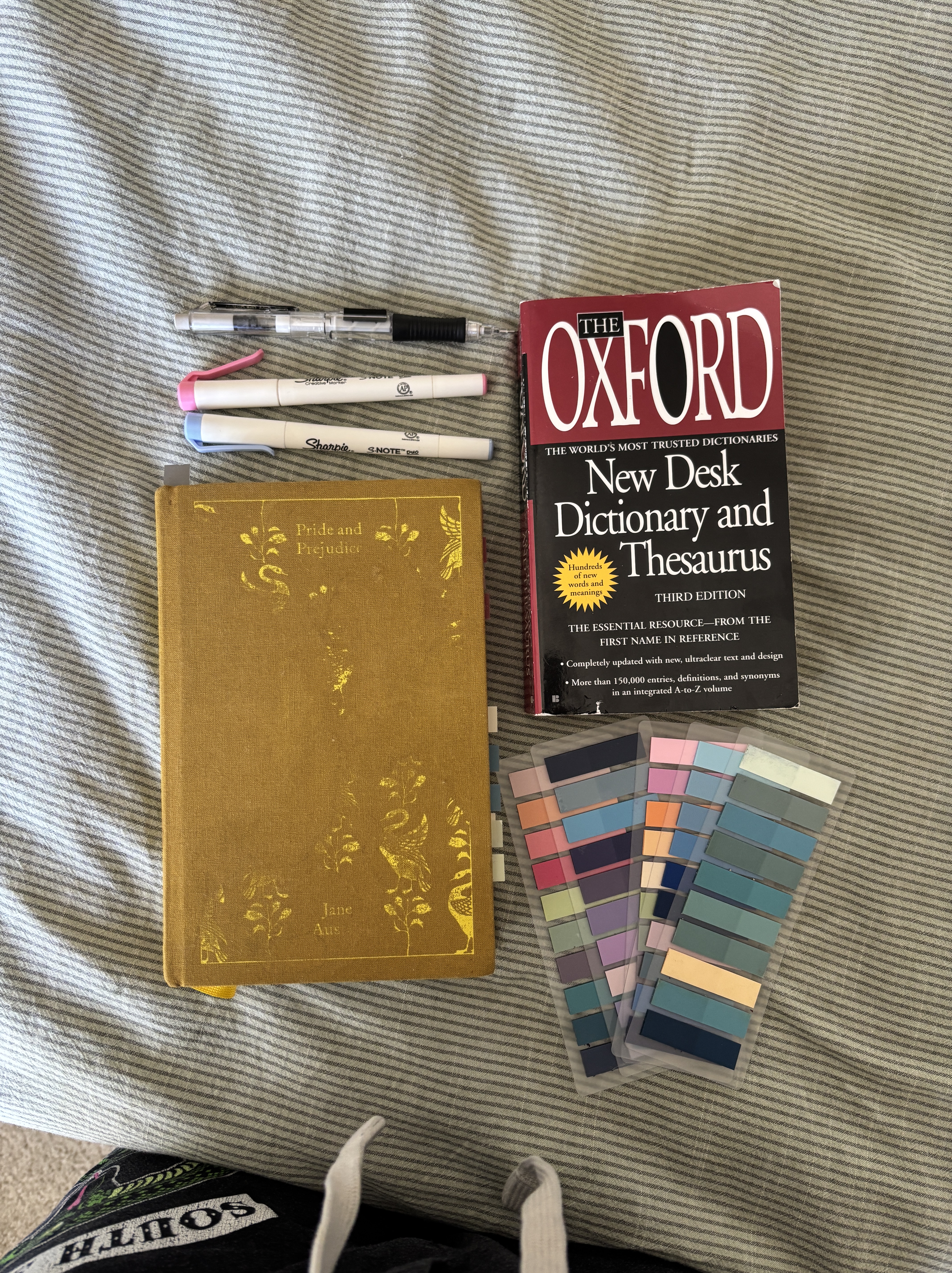
My annotation tools:
Links Provided
- Mechanical Pencil 0.7 Pencil
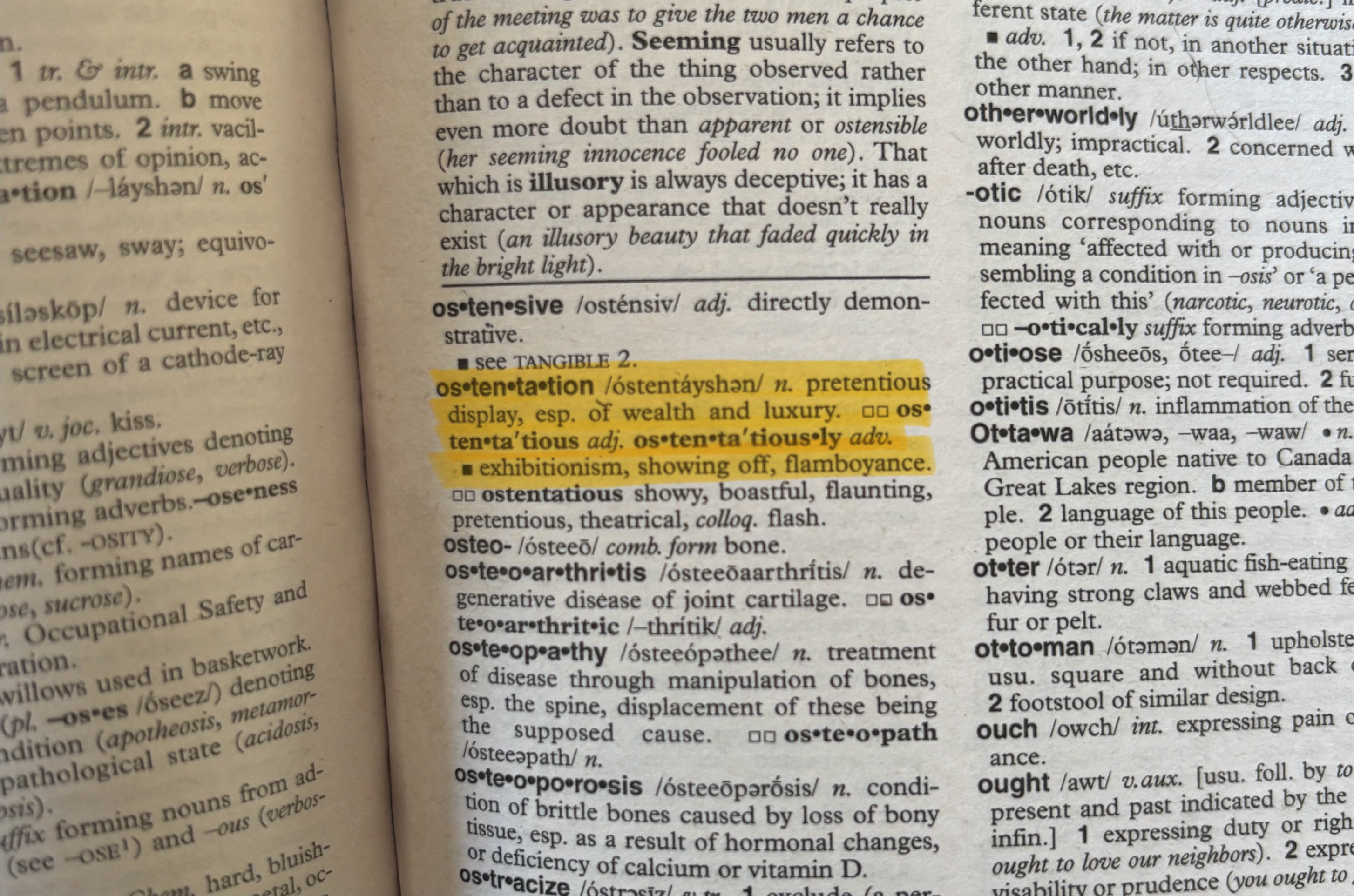
- Dictionary
- Tabs ( https://amzn.to/4kDMUph )
- Pastel Highlighters ( https://amzn.to/4jEFW1U )

I personally write directly in my books, but it that’s not your style, you can use transparent sticky notes, they’re great if you want to preserve your pages and still take notes.
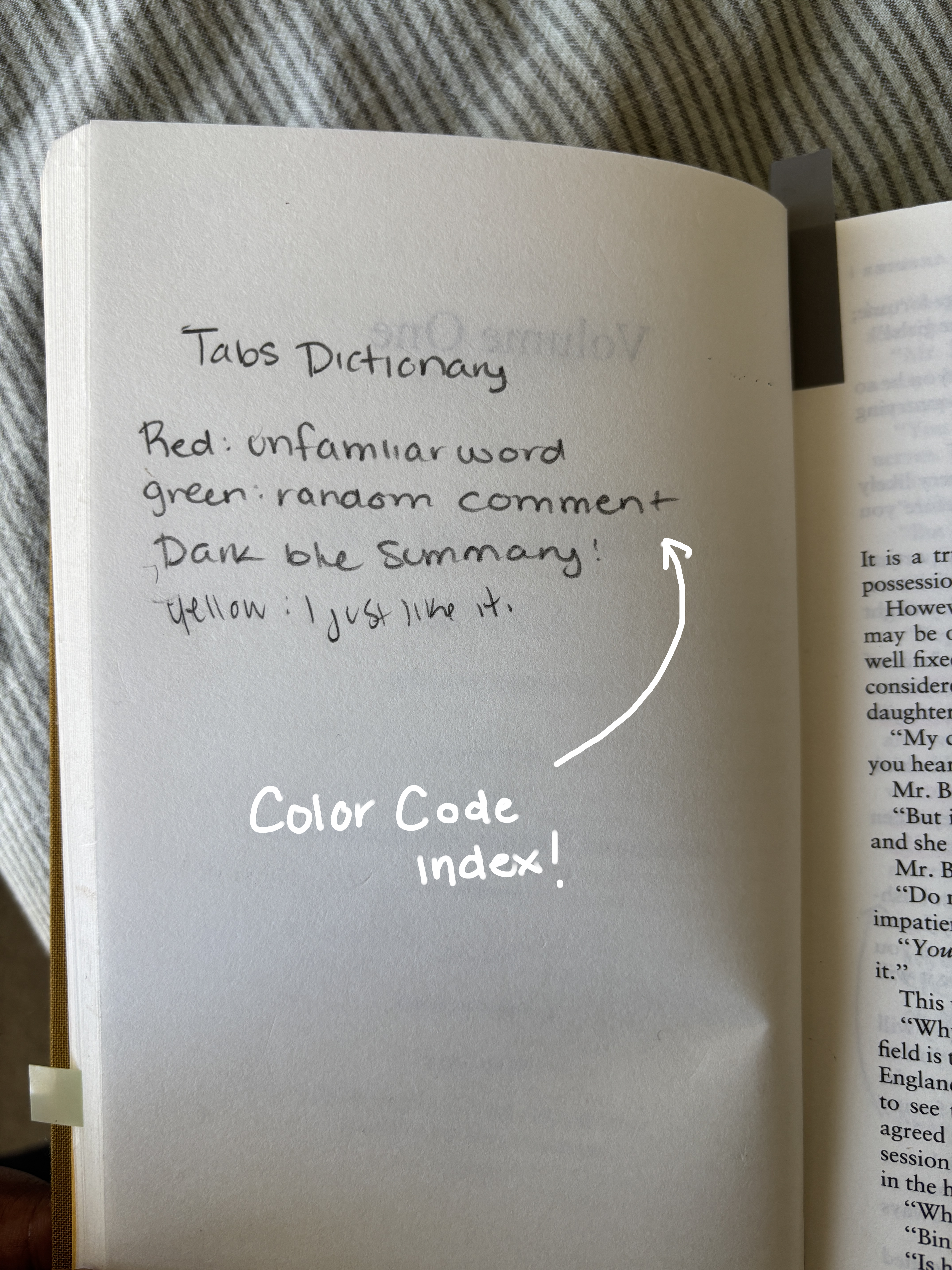
My color code system:
- Yellow: Lines I loved (strong quotes or moments that made me pause and reflect)
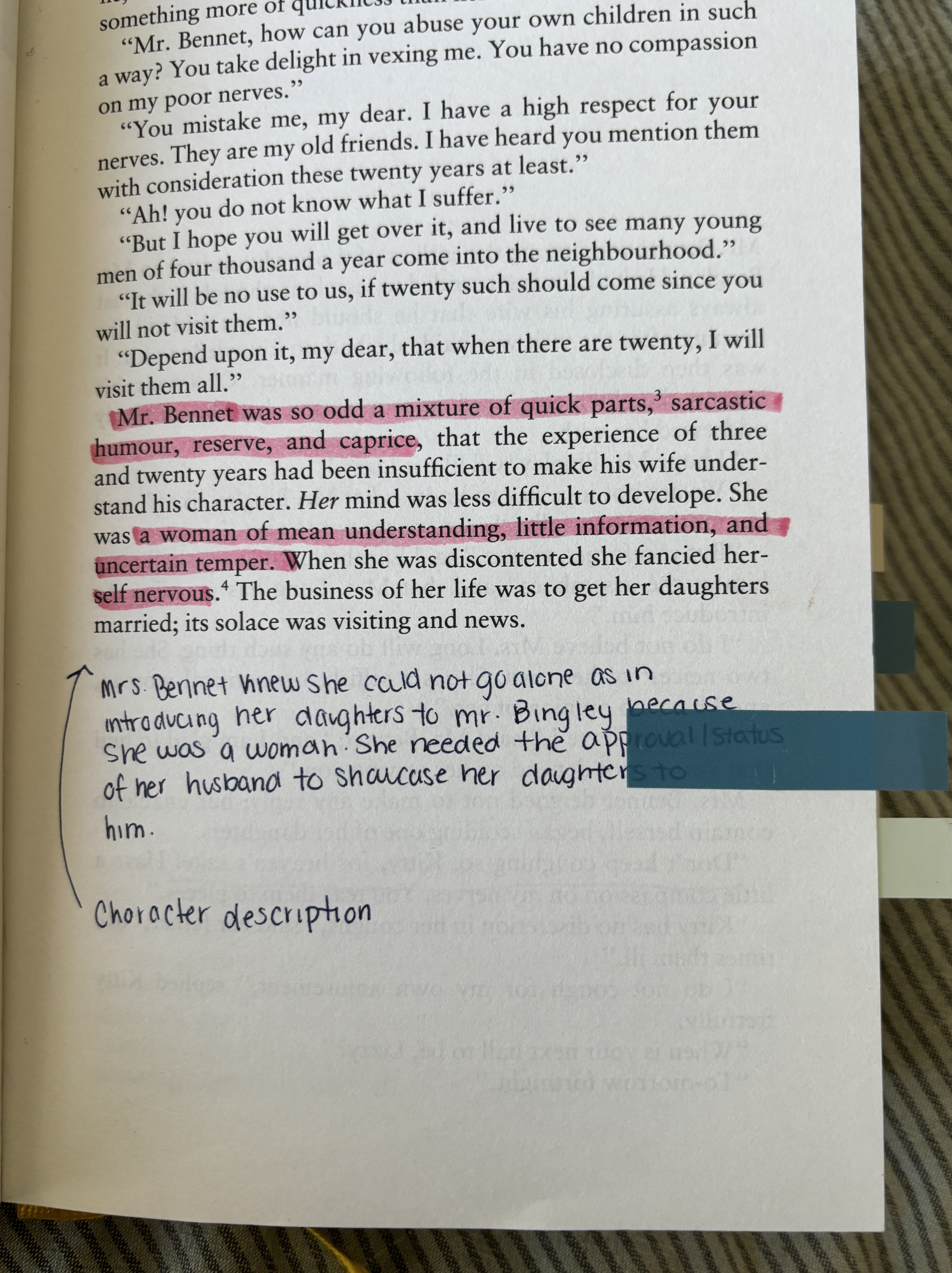
- Dark Blue: Chapter Summaries (I jot down these at the start or end of a section)
- Green: Random Reactions (a laugh, a sudden realization, emotional response)
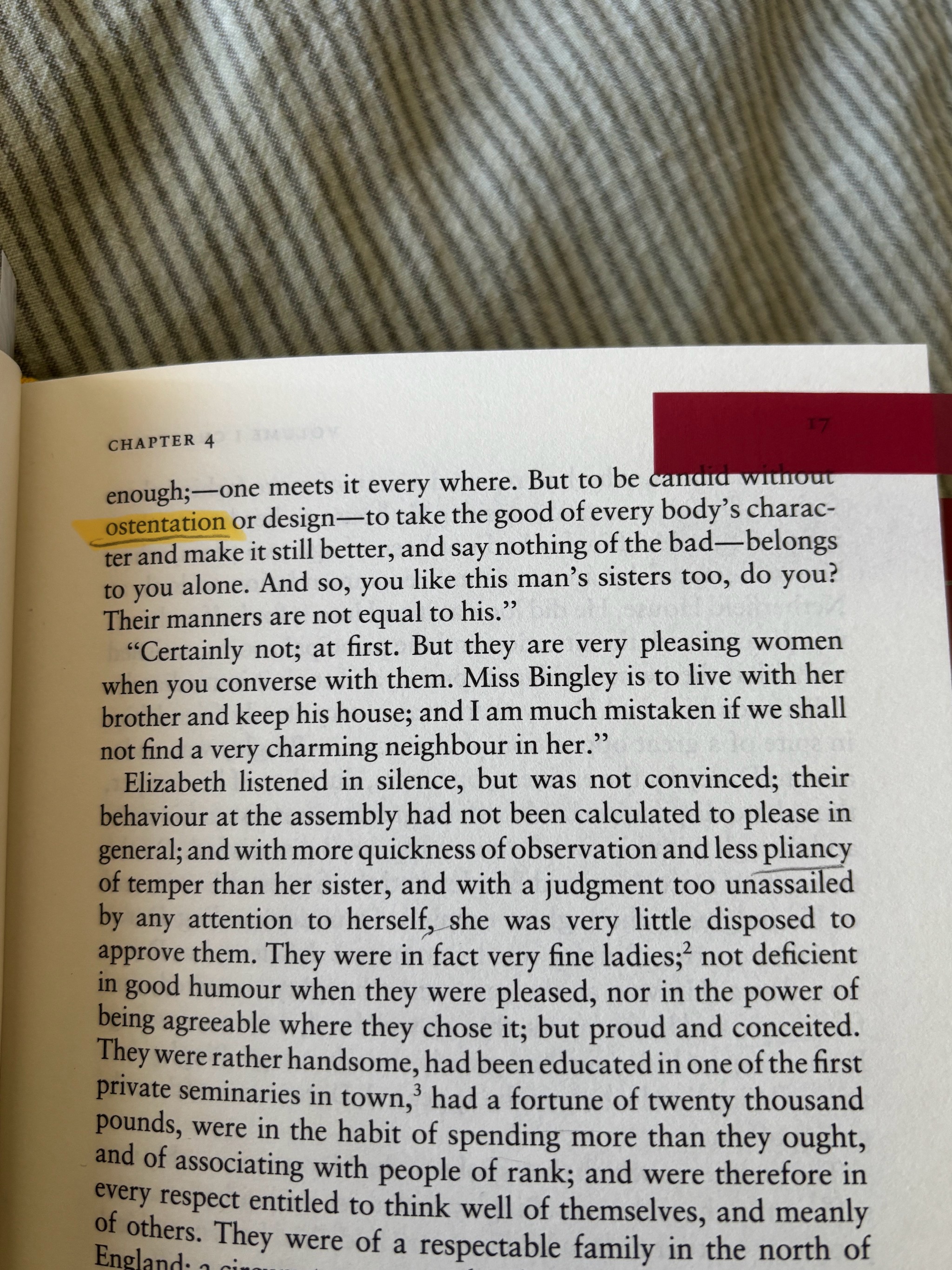
- Red: Unfamiliar words (these go straight to the dictionary and into my vocab list)
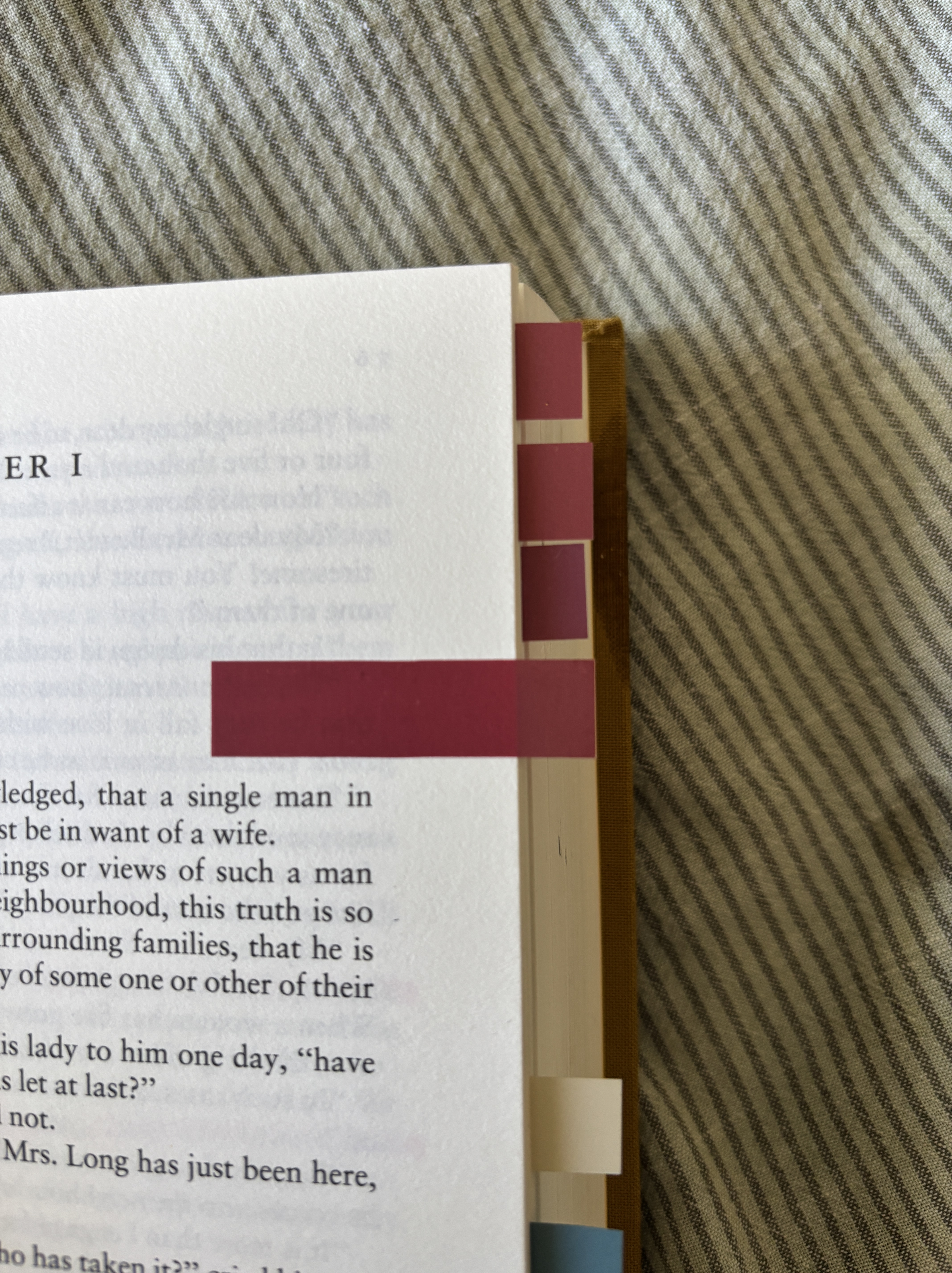
Why I use a Dictionary: Instead of grabbing my phone, which usually ends up in me doom scrolling, I use a physical dictionary. It keeps me in the reading zone and helps me truly remember the new words I encounter.
How I annotate:
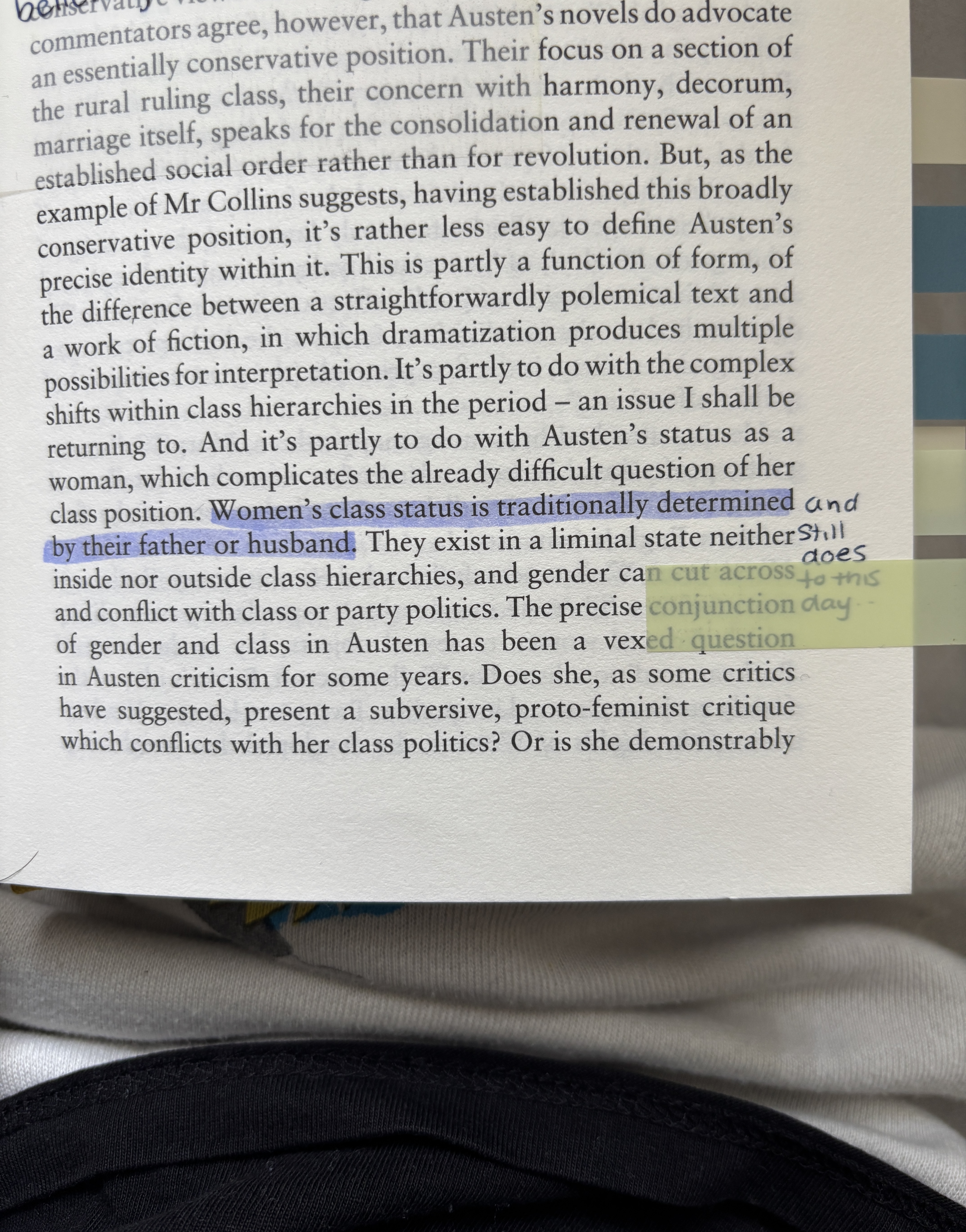
Highlighting: If there’s a quote I want to return to, I highlight it and mark it with a tab.
Example (In Pride and Prejudice)
“Women’s class status is traditionally determined by their father or husband.” I marked this line because it still reflects societal dynamics today. It made me stop and think.
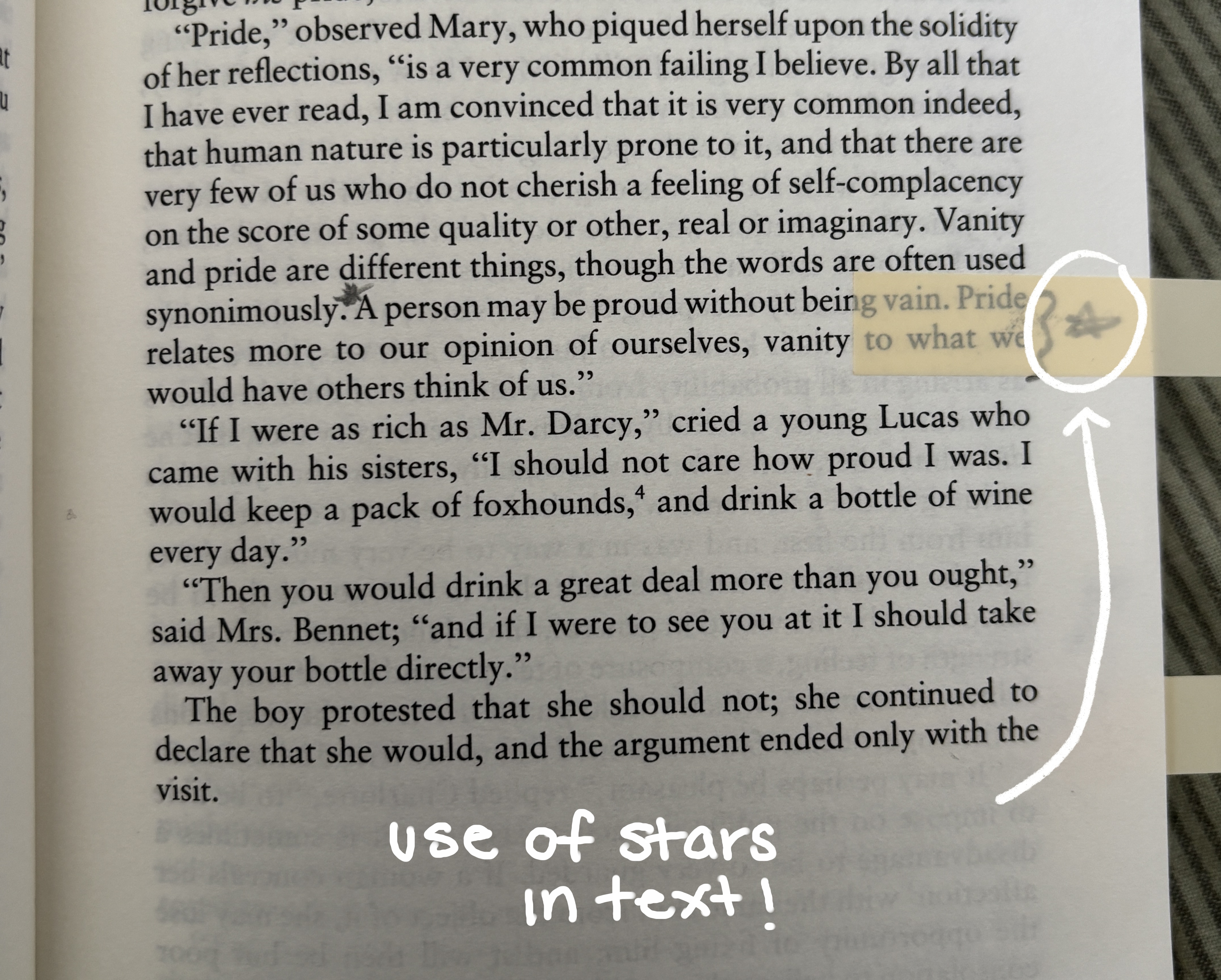
Stars: If something really hits, I’ll draw a little star besides it for emphasis.
Example:
“A person may be proud without being vain. Pride relates more to our opinion of ourselves, vanity to what we would have others think of us.” This line caught my attention as it highlights that a person can have a strong sense of self respect without needing constant external validation. It made me think of Elizabeth and Darcy’s self-awareness, and Mary’s tendency to over-intellectualize.
My annotation ritual:
To be honest, I can’t annotate unless I’m in a cozy, quiet space, no chaos, no distractions. I need to feel present and aware.
Music: I enjoy nice jazz or very soft music! Song like Polaroid love by Enhypen
Pomodoro Timer: Helps me stay focused without rushing
Link to pomodoro timer I use: https://youtu.be/b47w3f5PQJI?si=J4gOMrOVbYsTh9N-
Reflection: After reading, I enjoy reading a brief summary of what I read! It helps me refresh my mind and close out my reading session in a nice mood.
That’s all for my annotating post!! I hope this post gives you some inspiration to reconnect with reading in a creative and mindful way. Your copy doesn’t have to be perfect or pretty, it just has to reflect you. Let your notes be messy, emotional, and honest.
Question:
Do you annotate? If so, what is your ideal method? If not, would you want to try it this way?
Some links provided are affiliated and I do make a small commission, Thank you!